
Complete Flooring Services for Residential and Commercial Spaces
Choosing the right flooring services in Miami means balancing aesthetics, durability, and the region’s high humidity and salt air. This guide walks through the full range of options, including hardwood, tile, laminate, vinyl, carpet and epoxy-based systems, and explains professional installation steps, moisture testing, realistic costs and timelines, maintenance needs, and safety considerations. You will also get a practical checklist for vetting local contractors, what to expect during an on-site estimate, and clear criteria for comparing proposals.
Flooring services landscape in Miami: residential versus commercial needs
Clear difference: residential projects prioritize comfort, appearance, and minimal disruption; commercial projects prioritize uptime, code compliance, and longevity under heavy use. That distinction shapes the choice between hardwood flooring, tile flooring, vinyl flooring, epoxy and polyaspartic systems, and the level of substrate work you must budget for.
Miami-specific constraint: elevated slab moisture, coastal salt exposure, and persistent humidity force different decisions here than inland markets. Moisture-driven failures are common when contractors skip proper testing or rely on generic primers — insist on documented in-situ RH or calcium chloride results before accepting a scope.
Match services to real use-cases
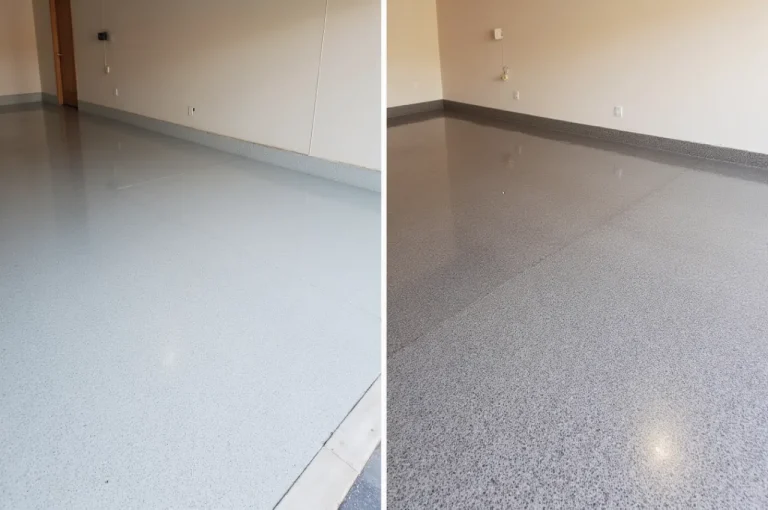
- Residential garage: decorative flake epoxy or luxury vinyl plank installation for a balance of aesthetics and chemical resistance — good value when prep is straightforward.
- Basement or patio: waterproof flooring options like engineered wood only with proven moisture mitigation; consider porcelain tile floors or epoxy with a vapor barrier for damp areas.
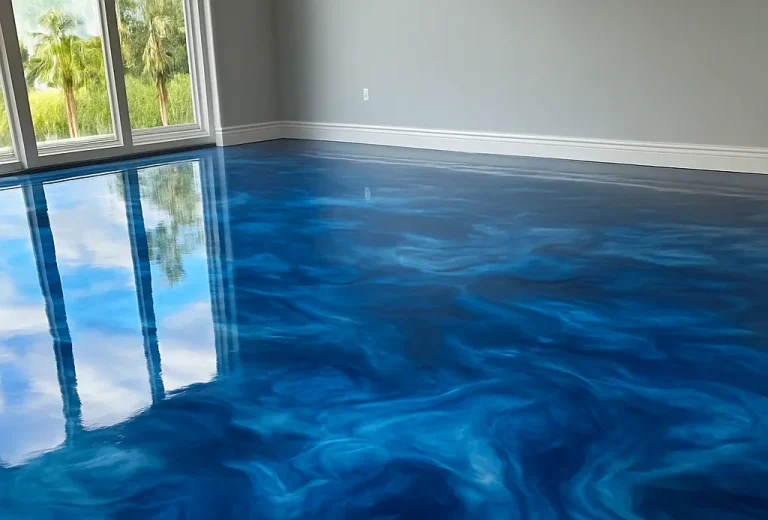
- Retail showroom: metallic epoxy or polished concrete for visual impact and low dust maintenance; choose UV-stable topcoats if there is direct sun exposure.
- Restaurant kitchen: quartz broadcast epoxy or cementitious urethane for slip resistance and chemical tolerance; frequent cleaning cycles demand a seamless, non-porous surface.
- Warehouse/industrial: heavy-duty epoxy or polyaspartic with epoxy primers, or epoxy terrazzo where long life and low lifecycle cost are priorities.
Important trade-off: faster-curing polyaspartic coatings minimize downtime for commercial tenants but cost more per square foot and may demand stricter temperature control during install. Conversely, 100 percent solids epoxies are economical and durable but require longer cure and more thorough moisture control.
Concrete example: a mid-size Miami restaurant converted a worn tile kitchen to a quartz-broadcast epoxy. The crew performed ASTM F2170 moisture testing, shot-blasted the slab, and completed the install in staged nights to avoid service interruption — the result reduced cleaning time and improved slip resistance during peak hours.
Practical judgment: many specifiers overestimate the transferability of residential specs to commercial sites. The substrate and operational schedule govern outcomes more than the visible finish. Ask contractors for a written substrate remediation plan and sample cure times for the exact system they propose.
Demand documented moisture test results and a substrate prep plan before signing a proposal — that single step prevents most failures in Miami conditions.
Why epoxy and related systems are frequently the best choice
Bottom line: when you need a seamless, low-dust, chemically resistant surface that stands up to heavy traffic, epoxy and its cousins usually outperform conventional finishes—provided the slab and moisture conditions are handled correctly.
What they deliver: these systems create a continuous membrane that resists oil, detergents, and frequent wet cleaning, reduces particulate generation compared with tile or unfinished concrete, and gives commercial spaces (showrooms, kitchens, garages, warehouses) a finish that is both functional and design-forward.
Real trade-offs that decide success
Epoxy, polyaspartic, and cementitious urethane occupy different slots in the trade-off matrix: epoxy tends to be the most affordable with excellent chemical resistance but needs longer cure and strict moisture control; polyaspartic cures fast and minimizes downtime but costs more and can be sensitive to application temperature; cementitious urethane tolerates heavy vehicle traffic and hot-tire pickup. Pick by operational constraints, not by showroom appeal.
Practical limitation: decorative finishes can hide poor substrate prep. A pretty metallic topcoat does not fix a slab that moves or off-gasses; short-term savings on prep are the most common cause of delamination and early failure in humid coastal climates.
- Durability vs downtime: choose polyaspartic when reopening a retail floor in 24-48 hours matters; accept a higher material cost for that benefit.
- Moisture sensitivity: if slab RH is above the product limit you must budget for mitigation or a different system—skipping mitigation risks a total failure within months.
- UV and color stability: select UV-stable topcoats for sun-exposed interiors or expect yellowing and gloss loss over time.
Concrete example: an automotive service center switched to a cementitious urethane finish in the bays. The crew performed RH testing, shot-blasted the concrete, and routed hairline cracks before installing a heavy-duty body coat and sealer. Result: oil stains are confined to the surface, pressure washing is straightforward, and vehicle lifts no longer track grit into the shop floor.
Judgment call most owners miss: accept that the visible finish is only as reliable as the unseen work. Insist on written moisture thresholds and a substrate-repair plan. If a bid emphasizes color options and sample chips but gives vague answers about testing and prep, price probably excludes the work that actually matters.
If your schedule is tight, ask for both performance data and cure-time expectations for the exact product proposed; fast cures have real trade-offs in cost and application sensitivity.
Types of flooring services and specific epoxy systems offered
Direct point: We offer a spectrum of flooring services that pairs each substrate condition and operational need with a specific epoxy or related system rather than a one-size-fits-all coating. Choosing the wrong system for a wet slab, sun-exposed showroom, or heavy-drive warehouse is the most common error and the one that costs real money later.
Specific systems and where they belong
| System | Best use case | Trade-offs and considerations | Typical lifespan (real-world) |
|---|---|---|---|
| Solid 100% solids epoxy | Garages, light industrial, indoor storage | Affordable and chemical resistant but slower cure; needs strict moisture control and full prep | 6–12 years with proper prep |
| Decorative flake (vinyl chip) epoxy | Residential garages, showrooms wanting texture and hide imperfections | Good aesthetics and abrasion resistance; flakes mask minor defects but won’t fix movement issues | 7–12 years; flakes can abrade in high-traffic aisles |
| Metallic epoxy | Retail showrooms, lobbies, design-forward spaces | High aesthetic impact; sensitive to surface movement, scratches show on glossy finishes, needs UV-stable topcoat in sunlit areas | 5–10 years depending on abrasion |
| Quartz broadcast epoxy | Restaurant kitchens, wet areas needing slip-resistance | Provides mechanical slip control and toughness; requires thicker build and longer grind-back prep | 8–15 years in commercial kitchens with routine maintenance |
| Polyaspartic (fast-cure) | Retail reopenings, areas needing minimal downtime | Extremely fast cure and UV stability but higher material cost and short pot life—requires experienced crews | 7–12 years; quick recoats possible |
| Cementitious urethane | Auto shops, heavy vehicle bays, industrial floors | Handles impact, hot-tire pickup and heavy loads; higher install complexity and cost | 10–20 years when installed to spec |
| Polished concrete / sealers | Showrooms, lobbies, warehouses prioritizing low-dust and minimal build | No membrane; depends on concrete condition and densifier chemistry; not a coating—repairs change finish | 10+ years if slab is sound |
Practical insight: Moisture and movement drive system choice. If measured slab RH exceeds the product limit, either use a moisture mitigation system (vapor barrier or specialized primer) or select a system tolerant of higher moisture. Skipping this step is the single biggest cause of early delamination in coastal climates.
- Installation skill matters: fast-cure polyaspartics reduce downtime but expose installers to compressed working windows—hire crews who document pot times and ambient controls.
- Slip control is quantifiable: specify target coefficient of friction or the aggregate grit size rather than vague slip-resistant claims.
- Decorative vs durable: decorative metallic finishes look great but are not the top choice for heavy abrasion zones; reserve metallics for display areas with controlled traffic.
Concrete example: A 600 sq ft boutique showroom in Miami selected a metallic epoxy with a UV-stable aliphatic topcoat after RH testing confirmed acceptable moisture. The crew shot-blasted, applied a primer, two base coats, the metallic effects, and a protective aliphatic sealer over three staged nights so the store could reopen during daytime hours. The finish delivered the desired visual impact but staff were instructed on daily floor care to limit surface scratches in high-heel traffic areas.
Choose the system for the operational reality you have, not the look you want; the right decorative finish with the wrong prep will fail faster than a plain system that was installed correctly.
Professional installation process and technical checklist
Practical point: flooring services are only as good as the work done below the surface. The visible finish—flake, metallic, quartz, or high-gloss epoxy—is secondary to a repeatable sequence of inspection, moisture assessment, substrate correction, and controlled application. Skip or shortcut any of those stages and you trade short-term savings for fast failure.
Key technical steps
- Site survey: document slab condition, existing coverings, joints, saw cuts, and traffic patterns. Take photos and note access constraints.
- Moisture mapping: perform documented RH testing and/or calcium chloride tests per ASTM standards — include probe locations, dates, and ambient conditions. See ASTM F2170 for RH testing guidance.
- Profile and preparation: choose diamond grinding or shot blasting to expose clean, load-bearing concrete. Each method has trade-offs in dust, edge detail, and profile consistency.
- Repairs and leveling: route and fill cracks, repair spalls with epoxy or cementitious mortars, and install feather coats or self-levelers where required to achieve the target tolerance.
- Primer and mitigation: apply the specified primer or moisture mitigation system when tests require it. Mistakenly using a cosmetic primer instead of a vapor-control primer is a common failure mode.
- Build system: broadcast quartz or flakes, apply base coats, and finish with the selected topcoat—observe pot life, ambient temperature, and humidity limits during each stage.
- Cure, QA, and documentation: measure hardness or tack-free times, photograph finished seams and edges, and deliver written cure and occupancy timelines to the owner.
Moisture and substrate considerations that determine success
Key limitation: acceptable moisture thresholds vary by product and are non-negotiable in humid coastal markets. If slab RH readings exceed a product’s limit the options are limited: install an approved vapor mitigation system, select a tolerant system, or postpone the project until remediation is completed. Choosing a decorative finish because it looks good will not fix moisture-driven adhesion loss.
Trade-off insight: grinding yields the cleanest mechanical profile for adhesion but produces fine dust and takes longer; shot blasting is faster for large, heavy-duty areas but can struggle on thin slabs or around edges. Match the method to slab thickness, finish expectations, and site logistics.
Concrete example: a 5,000 square-foot Miami retail space showed elevated RH in corner zones during pre-bid testing. The chosen approach combined localized vapor mitigation under the high-RH zone and polyaspartic surfacing elsewhere to meet the client deadline. The team staged the work overnight, supplied RH maps with probe photos in the report, and reopened the sales floor within 48 hours in treated areas.
– Written RH test map with probe photos and timestamps
– Specified system name, solids content, and manufacturer data sheets
– Surface prep method (grinding or shot blast) and profile target
– Repair scope and materials for cracks/spalls
– Primer/mitigation plan if moisture exceeds limits
– Cure schedule with earliest light-use and full-load dates
– Warranty terms and maintenance instructions
Insist on documented moisture mapping and a signed substrate repair plan before work starts; that paperwork is the single best predictor of long-term performance.
Cost ranges, timelines, and factors that influence budget
Up front: when comparing flooring services, the visible finish is a small fraction of the budget — substrate condition, moisture control, and access drive most costs. Expect bids that look close on paper to diverge once crews walk the slab. Demand itemized scopes and documented moisture test results before choosing a contractor; see our services page for what a complete proposal should include.
Ballpark cost bands (Miami market)
- Basic solid epoxy: $3–$7 / sq ft — economical, but needs thorough prep and longer cure.
- Decorative flake systems: $5–$10 / sq ft — hides minor defects; labor rises with complex edges and patterns.
- Metallic epoxy: $10–$18 / sq ft — high visual cost and extra labor for blend/control.
- Quartz broadcast (slip-resistant): $8–$15 / sq ft — thicker build and grind-back add to labor.
- Polyaspartic (fast-cure): $8–$16 / sq ft — higher material cost, reduced downtime, application sensitivity increases labor cost.
- Polished concrete / densifier: $4–$12 / sq ft — wide range depending on concrete condition and final gloss.
Budget add-ons to expect: moisture mitigation, crack repair, leveling compounds, perimeter edge work, and specialized primers. In Miami, plan for moisture mitigation or vapor-control primers on a meaningful share of projects — that can add $2–$8 / sq ft or more depending on severity and product choice.
Timeline expectations and sequencing
- Small residential garage (typical): 2–4 calendar days from prep to light use; full vehicle use often delayed several additional days depending on system.
- Restaurant kitchen or retail area: 3–7 days when staged for night work; slip-resistant broadcast systems require extra cure and grind time.
- Large warehouse or industrial bay: 1–2 weeks including heavy grinding/repairs and extended cure for heavy-load readiness.
- Fast-track polyaspartic option: can allow foot traffic within 12–36 hours in controlled conditions but requires experienced installers and stable ambient conditions.
Trade-off to weigh: faster return-to-service almost always costs more and narrows the installer margin for error. Choosing a fast-cure product to meet a short shutdown window demands tighter environmental controls on the day of install — budgets should include contingency for rework if conditions shift.
Concrete example: For a 500 sq ft garage, a mid-range decorative flake system at $8 / sq ft plus $1.50 / sq ft for minor repairs and $3 / sq ft for primer/moisture control results in approximately $6,250 installed. For a 5,000 sq ft warehouse using a heavy-duty cementitious urethane at $10 / sq ft with $2 / sq ft in repairs and $4 / sq ft for shot-blasting and mitigation, budget near $80,000. These are illustrative scenarios; on-site inspection and RH testing change the final scope.
Common mistake owners make: treating all epoxy bids as interchangeable. In practice, two quotes can differ because one includes ASTM F2170 in-situ RH mapping, shot-blasting, and substrate patching while the other assumes a broom-clean slab. Low bids frequently omit the prep and mitigation that prevent failure in humid coastal environments.
Final judgment: cheapest per-square-foot price rarely saves money long-term. Pay for thorough testing and prep up front — in Miami those line items are insurance, not optional extras. For guidance on test methods see ASTM F2170 and background on coatings at ConcreteNetwork.
Maintenance, lifespan, safety, and warranties
Maintenance is the cost driver people under-estimate. For any set of flooring services, the long-term expense and safety profile are shaped far more by maintenance discipline and substrate condition than by the finish you pick. Plan for a maintenance regime before you select a system; warranties and useful life hinge on it.
Practical maintenance that preserves performance
Daily to monthly actions. Sweep or dust-mop to remove grit, use pH-neutral cleaners for routine wet cleaning, and avoid acidic or solvent-based degreasers unless the manufacturer approves them. For textured, slip-resistant surfaces, schedule more frequent deep-clean scrubbing because trapped soil and grease reduce friction over time.
- Inspect monthly: look for gloss loss, grout cracks, seam lifting, or areas where coating has thinned.
- Document spills and repairs: keep a short log to preserve warranty eligibility and to time recoats.
- Recoat triggers: don’t wait a cosmetic failure—plan a maintenance recoat when adhesion tests or visual inspection show wear in high-traffic corridors.
Trade-off to accept up front. Increasing slip resistance typically means a more textured surface that holds dirt and grease more readily. That improves safety when clean but raises cleaning labor and may require stronger degreasers that can shorten topcoat life. Choose the balance that matches your operational tolerance for cleaning and downtime.
Lifespan in real conditions and what shortens it
Lifespan varies by stress, not label. The same epoxy product will last very differently in a climate-controlled showroom versus a kitchen with heavy chemical exposure. The critical failure drivers are poor substrate prep, ongoing moisture migration from the slab, and abrasive wear from grit or equipment wheels. Expect maintenance needs to cluster in high-traffic zones.
Concrete example: A busy commercial kitchen switched to a quartz-broadcast surface for slip control. Because staff did not increase nightly degreasing, coarse grease built up in the texture and reduced traction. After targeted deep cleaning and a spot recoat of the top layer, slip resistance returned and the owner started weekly deep-clean cycles to prevent repeat issues.
Warranties: how to read and negotiate them
Warranties are conditional, not automatic. There are two parts to insist on: a manufacturer product warranty and a contractor workmanship warranty. Both typically require documented pre-install conditions (moisture tests, substrate prep photos) and adherence to the prescribed maintenance schedule to remain valid.
- Ask for specifics: warranty length, what it covers (delamination, color fade, chemical attack), and whether repairs are labor-only, prorated, or full replacement.
- Get the exclusions in writing: common exclusions include moisture-related failures, physical abuse, improper cleaning agents, and UV bleaching.
- Request a remediation path: include response times, who pays for testing, and a dispute-resolution step in the contract.
Final judgment: prioritize documented maintenance and clear warranty language over flashy samples. A well-maintained, mid-range system with a solid workmanship warranty will outperform a high-end decorative finish that lacks documented substrate work and a maintenance plan. If you need industry guidance on safety standards, consult OSHA walking and working surfaces.
Keep maintenance records and pre-install test documentation; those two items determine whether a warranty protects you or is denied when problems show up.
How to choose a flooring contractor in Miami and next steps with Miami Epoxy Resin
Hire process over price. In Miami the single best predictor of a satisfactory floor is a contractor who explains and documents how they will handle the slab, moisture, and schedule — not the lowest square-foot number. Look for firms that tie payments and timelines to measurable deliverables (moisture map, sample patch, photographed prep) rather than to vague promises.
Practical vetting steps
- Confirm local registration and insurance: request Miami-Dade permit familiarity, evidence of general liability and workers compensation, and policy limits for commercial sites.
- Require project-specific moisture data: ask for an in-situ RH map (ASTM F2170) with probe photos and timestamps rather than a generic statement that the slab is fine.
- Insist on an on-slab sample patch: a 2×2 ft mock patch on the actual slab reveals adhesion and visual interaction under your lighting; accept a small extra fee for this — it buys long-term certainty.
- Get manufacturer-level specs: require the exact product name, manufacturer data sheet, solids content, and chemical resistance table in the proposal, not just the word epoxy.
- Demand a risk and contingency plan: ask how the crew will handle wet days, high RH, discovered repairs, or delayed primers and what extra costs (if any) would be charged.
- Payment tied to milestones: split invoicing so a final balance is held until you receive moisture maps, prep photos, cured sample approval, and the warranty paperwork.
Trade-off to expect: insisting on a sample patch and RH mapping adds a small time and cost overhead up front, but it eliminates most surprises in humid coastal projects. Skipping the mock patch saves money today and raises the chance of expensive delamination later.
What to expect from a Miami Epoxy Resin on-site estimate
A Miami Epoxy Resin estimator will walk the space with a moisture meter and camera, note traffic patterns and access windows, and identify joints or repairs. You should receive a written proposal within 48 to 72 hours that includes named products, an RH test plan or recent results, a proposed surface-prep method, and a staged schedule showing earliest light-use and full-occupancy dates.
Concrete example: a condominium association invited Miami Epoxy Resin for a lobby resurfacing. The estimator produced an RH map with probe photos that identified two high-RH pockets. The proposal included localized vapor mitigation, a 2×2 ft sample patch in the entry under the same lighting, and a three-night install plan timed for low-traffic hours. That upfront rigor prevented a follow-up failure and protected the building warranty.
When comparing bids, treat the scope documents as the deliverable. A detailed contract that names the system, lists accepted RH thresholds, and requires a sample patch is worth paying for. If a proposal is light on specifics or resists providing manufacturer data sheets and test photos, move to the next bidder or request clarifications in writing. For reference on RH testing protocols see ASTM F2170 and for our service descriptions visit Miami Epoxy Resin services.
Next consideration: require a final milestone that ties release of the last payment to delivery of the RH report, sample patch acceptance, and signed warranty documents — that single contract term shifts incentives toward proper prep and away from shortcuts.
Frequently Asked Questions
Short answers, no fluff. Below are the practical responses owners and managers need when comparing flooring services in Miami — the questions contractors expect and the documentation you should require before signing.
Straightforward Q&A for procurement and planning
Q: How long will an epoxy floor hold up in service? A properly prepared and maintained epoxy or related system will perform far longer than a cosmetic application; actual life depends on traffic, chemicals, and slab moisture. Expect variable service lives—what matters is documented substrate prep and a maintenance plan, not the marketing lifespan on a sample card.
Q: Can you coat over existing tile or resilient flooring? Sometimes, but only when the existing material is structurally sound and adhesion is proven. Most professionals prefer to remove coverings and bond directly to clean concrete because lingering adhesives or loose tiles are frequent failure points.
Q: What timing should I plan for reopening a space? Timeline is driven by prep and chosen chemistry. Fast-cure systems reduce downtime but demand tighter temperature and humidity control during application. Budget the schedule around the slowest item in the chain—prep, repairs, or vapor control—not the advertised cure time alone.
Q: Which moisture tests do I ask for? Request an in-situ relative humidity map per ASTM F2170 and, when the spec calls for it, a calcium chloride test per ASTM F1869. The test report should include probe locations, timestamps, and ambient conditions.
Q: Will epoxy be slip resistant in wet or greasy areas? Yes, when the system includes a mechanical aggregate or quartz broadcast and the spec sets a target coefficient of friction. Don’t accept vague slip-resistant claims—ask for the aggregate type and target measurement method.
Q: What routine maintenance will keep a commercial floor healthy? Regular removal of grit, pH-neutral cleaning, and scheduled inspections are the baseline. Heavily soiled or greasy environments require more frequent deep cleaning and a documented recoat plan tied to observed wear, not a calendar date.
Practical trade-off to accept: choosing a rapid-return system reduces business disruption but raises material and labor precision requirements. If you prioritize the shortest shutdown, factor in a slightly higher price and insist on an installer with documented experience on the exact fast-cure product.
Concrete example: A small production brewery replaced an old seal with a chemical-resistant cementitious urethane in the bottling room. Pre-install RH testing revealed elevated moisture near a loading bay, so the crew installed localized vapor mitigation before the build. The result: the floor accepted regular acid-based washdowns without delaminating, and the owner scheduled quarterly inspections to catch abrasion before it became a structural problem.
If a proposal focuses on color samples but provides vague answers on testing and prep, consider that a red flag — the visible finish cannot compensate for deficient substrate work.
Next actions you can take right now: 1) Ask any bidder to email an RH test protocol before the visit; 2) require a priced on-slab sample patch in the proposal; 3) schedule an estimator visit during normal operating hours so traffic patterns and access issues are visible. For system guidance and sample specs see our services page and background on coatings at ConcreteNetwork.